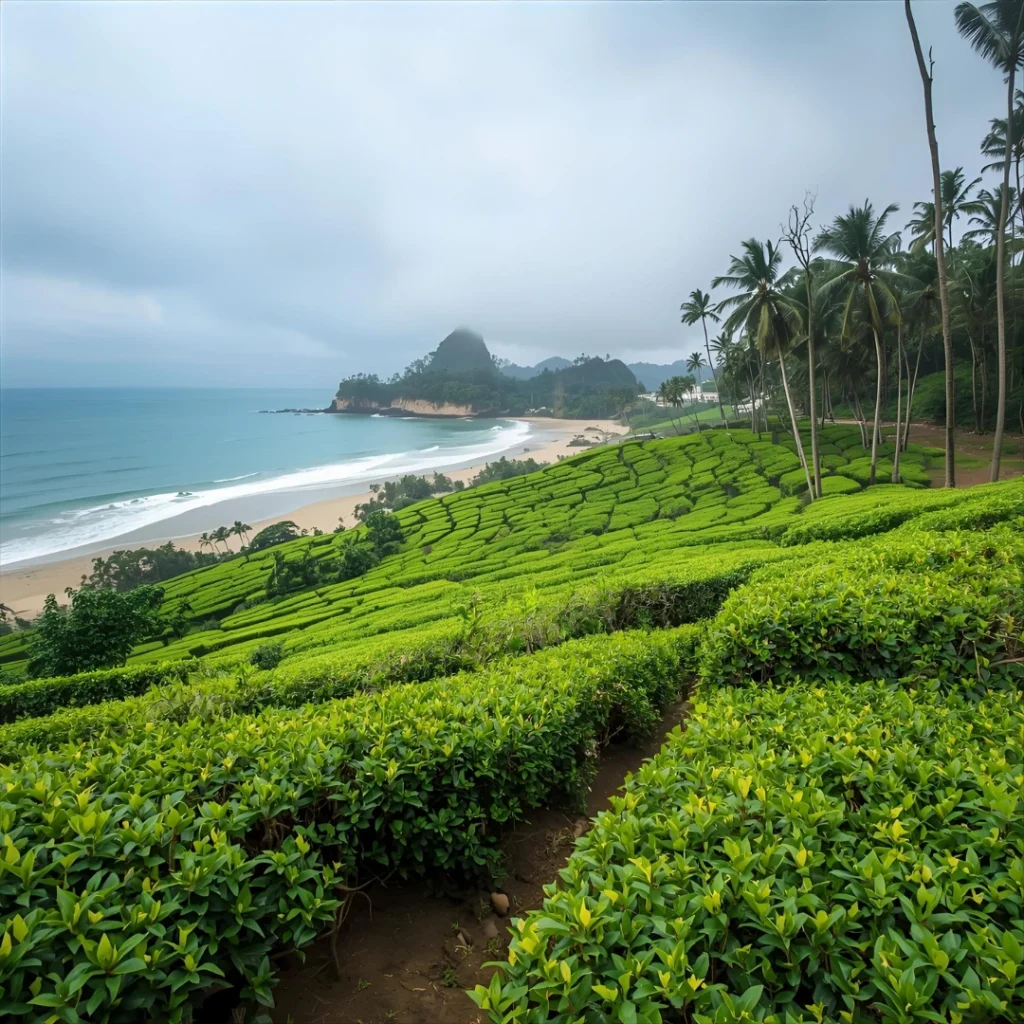
The Only Country, that can conquer 3 terrains in 3 hours.
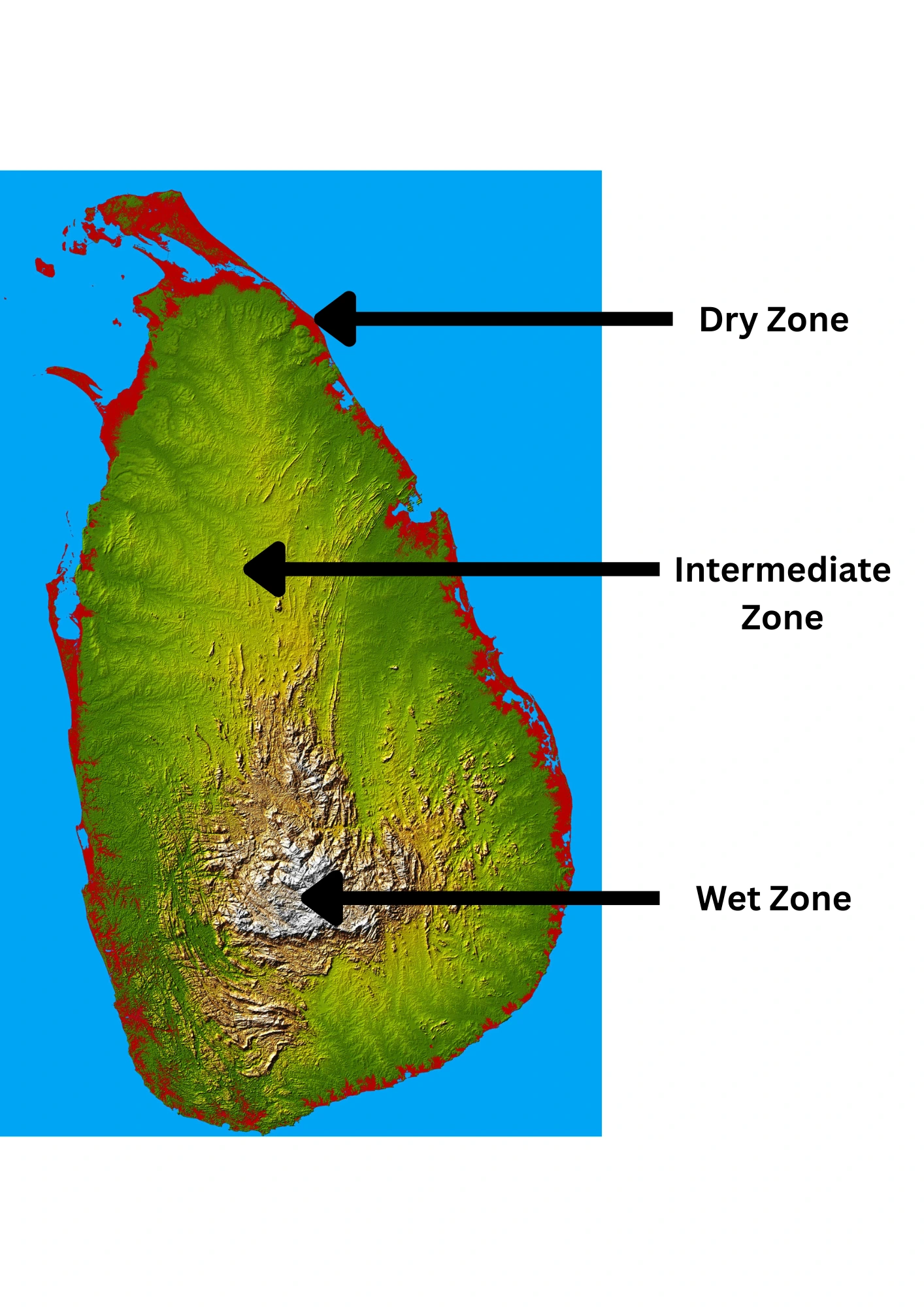
Three Main Zones of Sri Lanka
Sri Lanka is commonly divided into three main climatic (geo-ecological) zones based on rainfall patterns, altitude, and natural vegetation. These zones—the Wet Zone, Intermediate Zone, and Dry Zone—each have distinct climates, landscapes, and ecosystems. Together, they create the island’s rich environmental diversity, influencing agriculture, wildlife, human settlements, and travel experiences across the country.
The Wet Zone of Sri Lanka is located in the south-western part of the island and the central highlands. This region receives high rainfall throughout the year, creating lush green landscapes, dense rainforests, and world-famous tea plantations. Many important cities and tourist destinations such as Colombo, Galle, Kandy, Nuwara Eliya, and Ella are found in this zone. The favorable climate and fertile soil support major crops including tea, rubber, and coconut, making the Wet Zone an important agricultural and economic region of Sri Lanka.
The Intermediate Zone of Sri Lanka lies between the Wet Zone and the Dry Zone and serves as an important transition area between these two climatic regions. It receives moderate rainfall, supporting a mix of agricultural lands and natural vegetation. This balanced environment makes the zone suitable for diverse farming activities. Key areas such as Badulla, Kegalle, Matale, and parts of Mahiyanganaya are located within this region. Major crops grown here include rice, vegetables, fruits, and spices, contributing significantly to the country’s food production.
The Dry Zone of Sri Lanka covers the north, north-central, eastern, and south-eastern parts of the island. This region experiences low rainfall and long dry seasons, resulting in flat plains with scrub forests. It is historically significant, home to ancient irrigation systems, tanks, and important heritage sites that supported early civilizations. Major locations such as Anuradhapura, Polonnaruwa, Yala, Wilpattu, and Trincomalee are found in this zone. Agriculture here mainly depends on irrigation, with rice cultivation supported by tanks and traditional chena cultivation being widely practiced.
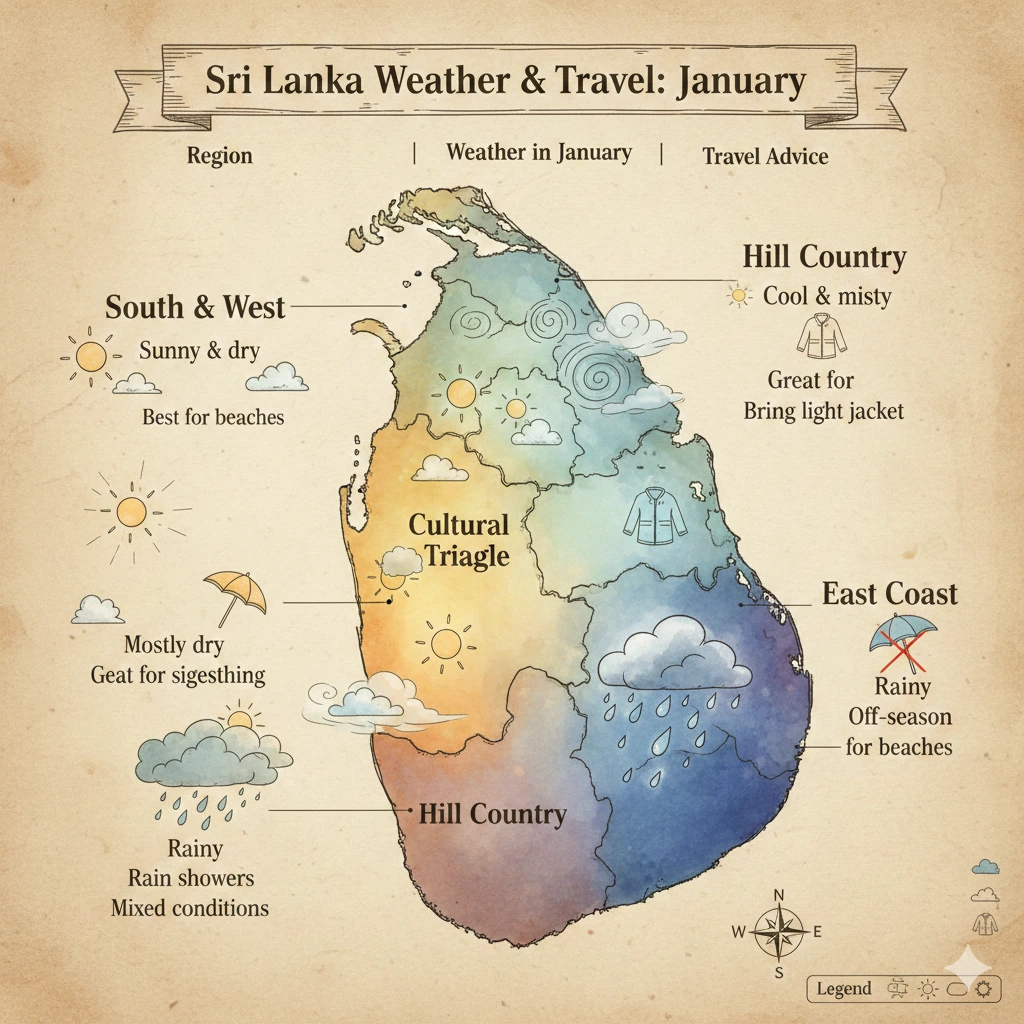
Weather of Sri Lanka
January Month
January is one of the best months to visit Sri Lanka, offering warm tropical temperatures, clear skies, and excellent travel conditions across much of the island. The south and west coasts—including popular beach destinations like Galle, Mirissa, Bentota, Hikkaduwa, Unawatuna, Colombo, and Negombo—enjoy hot, sunny weather with calm seas, making this the peak season for beach holidays, whale watching, and water sports ☀️🏖️. Inland areas within the Cultural Triangle, such as Sigiriya, Dambulla, Anuradhapura, and Polonnaruwa, are mostly dry and warm, providing ideal conditions for heritage tours, wildlife safaris, and exploring ancient temples. In contrast, the east coast—including Trincomalee, Batticaloa, Arugam Bay, and Pasikudah—and northern regions like Jaffna experience the northeast monsoon, bringing periodic rain and rough seas 🌧️. Meanwhile, the hill country destinations of Kandy, Nuwara Eliya, Ella, and Haputale offer a cooler, misty climate with occasional showers, creating stunning scenery for tea plantation visits and scenic train journeys 🌿🚆. Overall, with average temperatures ranging from 22–31 °C and up to 11 hours of sunshine per day, January is perfect for travelers seeking sunny beaches in the south and west while planning around seasonal rains in the east and north.